
On this page
How micro-mesh guards work
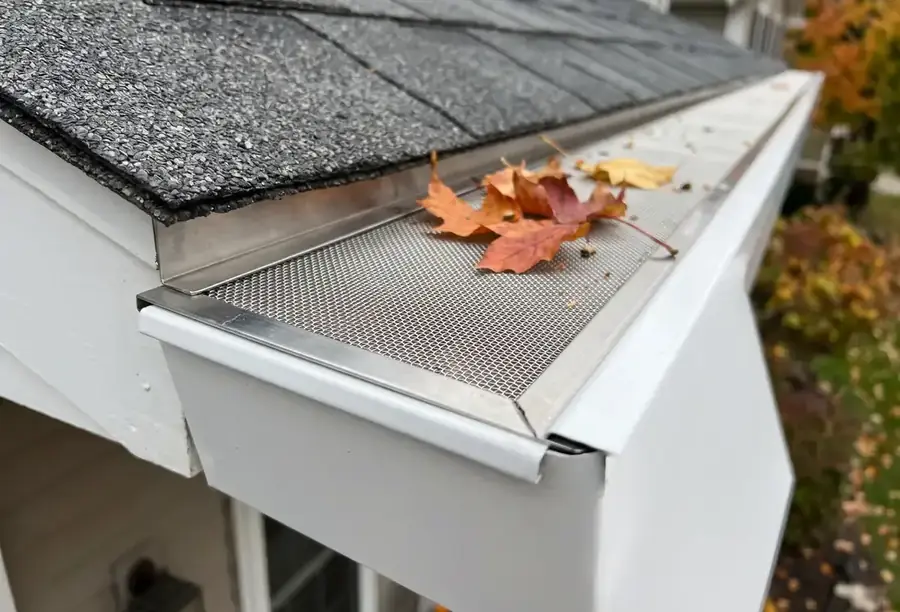
A micro-mesh guard is a frame, usually aluminum, holding a very fine stainless steel mesh. It fits over the top of the gutter and fastens to the front lip and, depending on the design, to the fascia or under the first course of shingles. Rain runs off the roof onto the mesh and drops through; needles, leaves, seeds and moss stay on top and blow or wash off.
The mesh openings are much smaller than a standard screen, which is why micro-mesh keeps out the small debris, needles above all, that defeats cheaper guards.
Why micro-mesh suits Seattle trees
Seattle's canopy covered about 28 percent of the city in 2021, and much of it is evergreen. The debris those trees drop is what decides the guard:
| Debris | Typical trees | Micro-mesh | Coarse screen |
|---|---|---|---|
| Needles | Douglas fir, western red cedar, pines, hemlock | Keeps out most | Lets through or lodges in holes |
| Large leaves | Big-leaf maple, alder | Keeps out | Keeps out |
| Seeds and catkins | Maples, alders, birches | Keeps out | Often lets through |
| Cones and twigs | Firs and pines | Keeps out | Usually keeps out |
| Moss clumps | Shaded roofs | Keeps out of the trough | Keeps out larger clumps |
| Shingle grit | Every roof | Mostly keeps out | Lets through |
Conifers drop needles in every season, so a house under firs or cedars fills its gutters slowly but constantly. That is where micro-mesh pays off most: it turns a year-round cleaning problem into an occasional brush-off.
Micro-mesh and Seattle rain
Seattle's rain is persistent more than intense, falling on about 156 days a year. That suits mesh guards: water has time to pass through. Two things still matter:
- Keep the mesh clean. A film of needle fragments, pollen or moss slows water. Brush it off in fall and spring.
- Size the gutter. The heavy days are increasing, with 68 days of more than an inch of rain from 2011 to 2020. A micro-mesh on a small gutter under a big roof can still overflow on those days. 6-inch gutters give more margin.
Moss and micro-mesh
Oregon State University Extension notes that moss on roofs is inevitable in the moist Pacific Northwest. With guards fitted, clumps that wash off the roof land on the mesh rather than in the outlet. On deeply shaded roofs, moss can begin to grow on the mesh itself; it brushes off, but the better answer is to deal with the roof moss gently. If you use zinc products, remember that zinc corrodes copper.
Installation matters
- Gutters first. The gutters are cleaned, re-hung and re-pitched if needed. Guards add a little weight and will not fix a sagging gutter.
- Correct size. The guard must match the gutter width exactly.
- Fastening. Screwed to the front lip and to the fascia or roof edge, not just laid in, so windstorms do not lift it.
- Roof warranty. Some guards slide under the shingles; some shingle makers do not allow that. Ask which style is used.
- Corners and valleys. Where water and debris concentrate, fitting must be careful.
A worked example
Here is an illustration, not a quote. A two-storey house in Lake Forest Park with 150 feet of gutter sits under tall firs and is cleaned three times a year. Micro-mesh at the national range of about $6 to $13 a foot would cost roughly $900 to $1,950. Against three cleanings at about $167 each, the guards pay back in about two to four years, and the owner stays off the ladder.
Cost
National guides give a wide range. HomeAdvisor puts installed gutter guards at about $6 to $13 per linear foot, and Angi reports an average job of about $1,514. Micro-mesh sits toward the higher end. National figures, not local quotes. See are gutter guards worth it for a payback test.