
On this page
What combined sewers are
In much of older Seattle, a single pipe carries both sewage from the house and stormwater from roofs and streets. King County notes that in these neighborhoods roof downspouts often flow into the sewer. In heavy rain the pipes fill and overflow, sending a mix of stormwater and sewage into Lake Washington, the Lake Washington Ship Canal, the Duwamish and Puget Sound. That is a combined sewer overflow.
What RainWise is
RainWise is a partnership between King County's Wastewater Treatment Division and Seattle Public Utilities. It pays eligible property owners to keep roof water out of the combined sewer by soaking it into the ground or storing it.
| What it pays for | Cisterns and rain gardens |
| How much | Rebates can cover most or all of the cost; reported averages have been around $4,740 |
| Who qualifies | Properties in eligible combined sewer basins, mostly in Seattle's oldest neighborhoods |
| How many homes | Over 40,000 homes have been reported as eligible |
| Where to check | SPU's RainWise page |
How it connects to your gutters
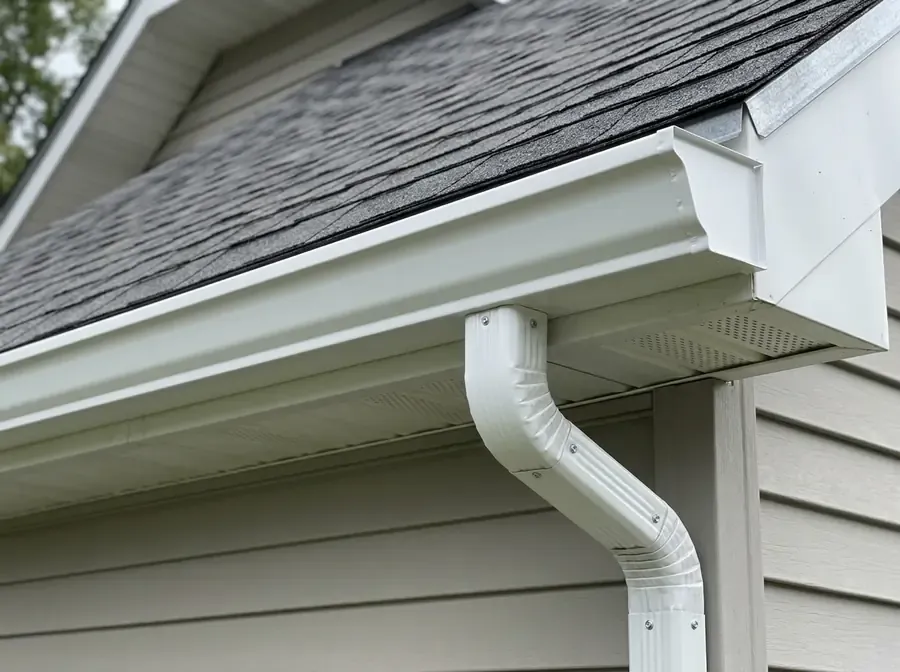
RainWise projects start at the gutters. Roof water is collected by the gutters, carried down a downspout, and redirected into a cistern or a rain garden instead of the sewer. That means:
- Gutters must be sound. A leaking or overflowing gutter does not deliver water to the cistern.
- Downspouts may need moving. A project may reroute one or more downspouts to reach the cistern or rain garden.
- The old sewer connection is capped where the downspout is disconnected. Capping a drainage side sewer needs a side sewer permit.
- Overflow must go somewhere safe. A full cistern or rain garden needs an overflow route away from the house, the neighbors and any slope.
Cisterns
A cistern is a tank fed by a downspout. It stores roof water and releases it slowly, or lets you use it in the garden. Washington's Department of Ecology has guidance on rainwater collection. Cisterns suit small lots and lots where a rain garden will not work.
Rain gardens
A rain garden is a shallow planted depression that collects downspout water and lets it soak in. It needs space, soil that drains, and a site away from foundations and slopes. RainWise guidance steers rain gardens away from steep slopes; see downspouts on steep slopes.
Practical steps
- Check eligibility on the RainWise site.
- Get the gutters in order. Repair leaks, re-hang sagging runs, clear needle clogs.
- Talk to a RainWise contractor about where a cistern or rain garden would go.
- Plan downspout changes with the contractor.
- Follow the permit rules for any sewer connection changes.
Even if you do not qualify
Outside the eligible basins, the same ideas still help: keep gutters flowing, send downspouts away from the foundation, and keep water off slopes. See downspout drainage.
A worked example
Here is an illustration. A 1910s house in Columbia City is in an eligible basin. Two rear downspouts feed the combined sewer. A RainWise contractor proposes a cistern for one and a rain garden for the other. Before installation, the owner has the sagging rear gutter re-hung and a needle-clogged outlet enlarged so both downspouts deliver water reliably.
Questions to ask before a RainWise project
- Is my address in an eligible basin, and which downspouts qualify?
- Will the cistern or rain garden take all of a downspout's water, and where does the overflow go?
- Do any gutters need repair or upsizing first so water reaches the system?
- Which sewer connections will be capped, and who arranges the permit?
- How is the rebate paid, and what paperwork does the program need?
Getting the gutters in order first means the rain garden or cistern gets the water it was designed for.