
On this page
Why drainage matters
A roof sheds a lot of water. With Seattle's normal annual rainfall of about 39 inches, a modest roof collects many thousands of gallons a year. If the downspouts dump it at the foundation, it soaks the soil against the walls, finds cracks in the basement, and can undermine footings, steps and walkways.
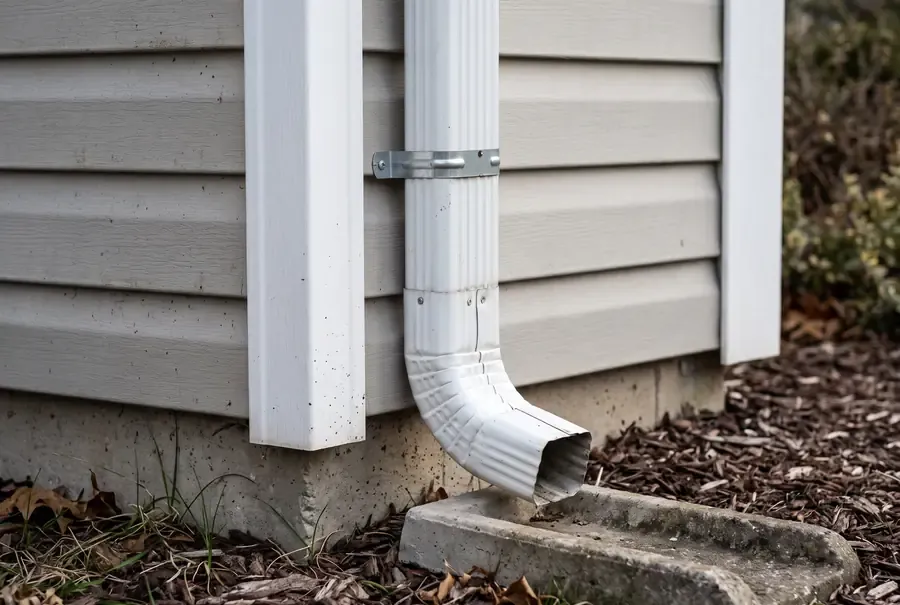
Where downspouts can go
| Option | How it works | Good for | Watch for |
|---|---|---|---|
| Extension or splash block | Carries water a few feet from the wall | Flat yards that slope away | Gets moved by mowers; must slope away |
| Buried drain line | Pipe carries water further | Yards where surface extensions are in the way | Needs cleanouts; can clog with needles |
| Combined sewer connection | Downspout drains into the sewer | Older neighborhoods where already connected | Not allowed in new connections outside those areas |
| Tightline to street drainage | Solid pipe to an approved point | Sloped lots, tight lots | May need permits |
| Rain garden | Planted depression soaks up water | Properties with space and suitable soil | Not on steep slopes or near foundations |
| Cistern | Tank stores roof water | Eligible RainWise properties | Overflow must go somewhere safe |
Seattle's combined sewers
In many of Seattle's older neighborhoods, the sewer carries both wastewater and stormwater. King County notes that in these areas roof downspouts often flow into the sewer, and that this is not allowed elsewhere. In heavy rain, combined sewers can overflow into Lake Washington, the Ship Canal and Puget Sound, which is why RainWise pays owners to manage roof water on site.
If you are thinking of disconnecting, King County describes the steps as cutting the downspout, capping the drain line and redirecting the water. The water still has to go somewhere safe. Capping or abandoning a drainage side sewer needs a side sewer permit from Seattle Public Utilities. See RainWise and combined sewers.
Sloped lots are different
Seattle has around 20,000 properties in landslide-prone areas, and the city notes that most landslides are caused by water, often uncontrolled stormwater. On a slope, a downspout dumping onto the hillside can do real harm. The city's advice is to check that downspouts are routed to a safe location, and its guidance for steep slopes says surface drainage should be kept away from them, with discharge points approved by SDCI. See downspouts on steep slopes.
Signs of drainage trouble
- Damp or musty basement after rain.
- Water stains or efflorescence on basement walls.
- Soil washed away at downspout outlets.
- Puddles against the foundation.
- Cracks in steps, patios or walkways near downspouts.
- Water flowing toward a neighbor's property.
- New cracks or soft ground on a slope.
Simple fixes
- Add extensions so water discharges well away from the wall.
- Regrade the soil so it slopes away from the house.
- Clear buried lines that have clogged with needles and moss.
- Reroute downspouts off slopes and away from neighbors.
- Check RainWise eligibility if you are in a combined sewer area.
A worked example
Here is an illustration. A 1920s house in Wallingford has four downspouts, two going into old clay drain pipes that connect to the combined sewer and two discharging at the foundation. The basement is damp under the two that discharge at the wall. Adding extensions to carry water across the lawn away from the house fixes the damp; the two sewer-connected downspouts stay as they are unless the owner pursues RainWise.
Checking your downspouts in the rain
The best time to check drainage is during a steady rain. Walk around the house and note at each downspout: does water flow out freely, where does it go, does it pool, and does it run back toward the house? Water bubbling up from the ground near an underground line, or a downspout that backs up and overflows at the top, means the line below is blocked or broken.